

Energy costs in the UK have risen sharply over recent years, and for commercial spaces, electricity waste has become a major hidden expense. Offices, retail units, shared buildings and mixed-use properties often consume far more energy than necessary, largely because lighting and electrical systems are left running when spaces are unoccupied. For business owners, landlords and property managers, this wasted energy quietly erodes profits every single day.
One of the most effective and accessible solutions to this problem is the use of presence and motion sensors. These technologies automate lighting and energy usage based on real occupancy, ensuring power is only used when people are actually in the space. When designed and installed correctly, presence and motion sensors deliver consistent energy savings with minimal disruption and relatively low upfront investment.
This article explains how presence and motion sensors work, how they reduce energy costs in commercial environments, and why Presence & Motion Sensors in UK buildings are becoming a standard part of modern energy-efficiency strategies. It also covers the benefits, limitations and best practices for installation, helping you decide whether they are right for your property.
Overview: Presence and Motion Sensors Explained
Presence and motion sensors are occupancy-detection devices that automatically control lighting and, in some cases, other building systems. Instead of relying on people to manually switch lights on and off, sensors detect when a space is in use and respond accordingly.
At a basic level, these systems reduce wasted electricity by switching lights off when rooms are empty. However, their impact goes beyond simple on-and-off control. Well-designed systems improve consistency, reduce human error and ensure energy-saving behaviour happens automatically.
Key points to understand include:
- Presence and motion sensors prevent lights being left on in empty spaces
- They work particularly well in areas with intermittent or unpredictable use
- Correct sensor selection and placement are critical to performance
- They offer one of the fastest returns on investment among energy upgrades
- Understanding Presence & Motion Sensors in UK buildings helps ensure compliance and efficiency
As energy prices remain volatile, automated lighting control has shifted from being a “nice to have” to a practical necessity for many commercial spaces.
The 5 W’s of Presence & Motion Sensors
Who Uses Presence & Motion Sensors?
Presence and motion sensors are widely used across a broad range of commercial environments in the UK. Typical users include:
- Small and medium-sized business owners
- Commercial landlords
- Property management companies
- Facilities managers
- Owners of mixed-use residential and commercial buildings
They are especially valuable in buildings where occupancy varies throughout the day or where users are unlikely to manually manage lighting consistently.
What Are Presence & Motion Sensors?
Presence and motion sensors are types of occupancy sensors that detect whether people are in a space.
Motion sensors detect larger movements, such as someone walking into a room or moving through a corridor. Presence sensors are more sensitive and can detect small movements, such as typing at a desk or shifting position while seated.
Both sensor types are used to automate lighting control, ensuring lights turn on when a space is occupied and turn off when it is not.
Where Are They Used?
Presence and motion sensors are commonly installed in:
- Offices and meeting rooms
- Retail spaces and shop floors
- Corridors, stairwells and lift lobbies
- Toilets and washrooms
- Storage rooms and warehouses
- Communal areas in commercial buildings
They are most effective in areas where lights are frequently left on unintentionally.
Why Do Presence & Motion Sensors Matter?
Lighting can account for a significant portion of electricity usage in commercial buildings. Even efficient lighting systems waste energy if they operate unnecessarily.
Presence and motion sensors eliminate this waste by ensuring lighting is only active when required. Over time, this leads to lower electricity bills, reduced maintenance costs and improved sustainability performance.
When Should Sensors Be Installed?
Presence and motion sensors can be installed:
- During refurbishments or fit-outs
- As part of energy-efficiency upgrade programmes
- When upgrading to LED lighting
- In response to rising energy costs
They can also be retrofitted into existing buildings with minimal disruption.
Pros and Cons of Presence & Motion Sensors

The Case for Presence & Motion Sensors
The biggest advantage of these systems is immediate energy savings. Lights no longer rely on human behaviour, which is often inconsistent.
Key benefits include:
- Reduced electricity consumption
- Lower energy bills
- Automatic and consistent operation
- Extended lifespan of lighting equipment
- Improved sustainability credentials
For many commercial spaces, these benefits begin delivering value as soon as the system is operational.
Potential Downsides to Consider
Despite their advantages, sensors are not without challenges.
Common issues include:
- Poor placement causing lights to switch off unexpectedly
- Incorrect sensitivity or time-delay settings
- Initial installation costs
- User frustration if systems are badly configured
These issues are usually the result of poor design or installation rather than flaws in the technology itself.
A Balanced Perspective
When installed following best practices, presence and motion sensors are one of the most reliable and cost-effective energy-saving upgrades available. Understanding both the benefits and limitations ensures expectations are realistic and outcomes are positive.
Presence Sensors vs Motion Sensors
What Is the Difference?
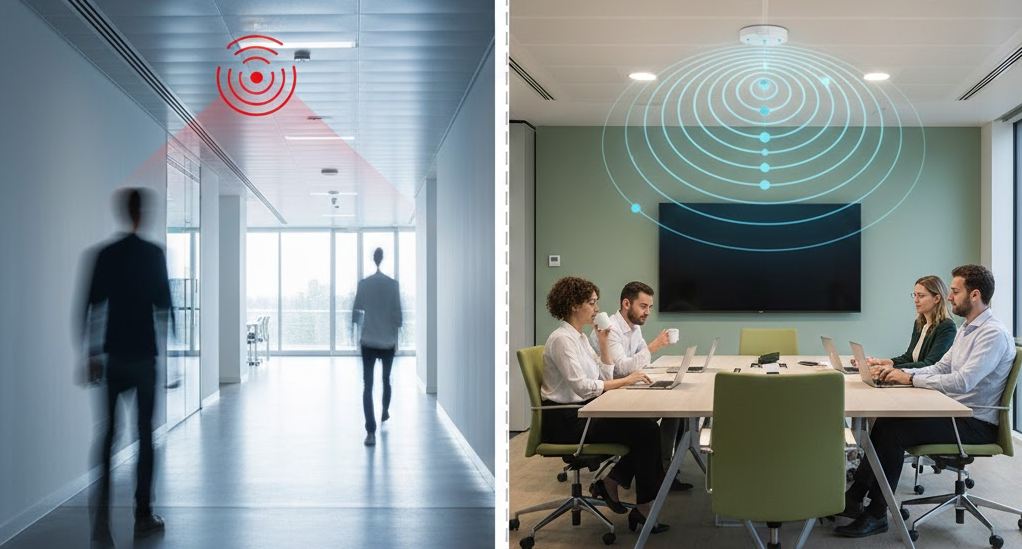
The terms presence sensor and motion sensor are often used interchangeably, but they serve slightly different purposes.
Motion sensors detect larger, more obvious movements. They are ideal for areas where people move frequently, such as corridors or stairwells.
Presence sensors detect much smaller movements. This makes them suitable for spaces where people remain relatively still, such as offices or meeting rooms.
Where Motion Sensors Work Best
Motion sensors are particularly effective in:
- Corridors and stairwells
- Toilets and washrooms
- Storage areas
- Entrances and exits
In these spaces, movement is clear and consistent, making motion detection reliable and cost-effective.
Where Presence Sensors Are More Effective
Presence sensors are better suited to:
- Offices with desk-based work
- Meeting rooms
- Libraries or quiet workspaces
- Training rooms or classrooms
In these environments, people may remain still for long periods, and standard motion sensors may fail to detect occupancy.
Choosing the Right Sensor Type
Selecting the right sensor depends on how the space is used. In many commercial buildings, a combination of both presence and motion sensors delivers the best results.
Understanding the differences between presence sensors vs motion sensors is essential for maximising energy savings and user comfort.
How Presence & Motion Sensors Reduce Energy Costs
Do Sensors Really Save Money?
Yes, when installed and configured correctly, presence and motion sensors consistently reduce energy consumption.
They do this by:
- Switching lights off automatically when spaces are empty
- Reducing the total hours lights are in operation
- Eliminating reliance on manual behaviour
Because the savings are automated, they are reliable and ongoing.
Energy Savings from Motion Sensors
Motion sensors are especially effective in high-traffic areas where lights are often left on unnecessarily. By ensuring lights are only active when movement is detected, they deliver immediate reductions in electricity usage.
In many commercial environments, lighting energy use can be reduced by 20 to 60 percent, depending on building type and usage patterns.
Presence Sensors and Office Efficiency
Presence sensors provide more refined control in office environments. They prevent lights switching off while people are working quietly and ensure lighting levels are appropriate for occupancy.
This improves comfort while still delivering meaningful energy savings.
Reduced Maintenance Costs
By reducing the total operating time of lighting systems, sensors also extend the lifespan of bulbs and fixtures. This lowers maintenance and replacement costs over time.
Presence & Motion Sensors in UK Commercial Buildings
Why They Matter in the UK
UK commercial buildings face increasing pressure to improve energy efficiency. Rising electricity prices, sustainability expectations and regulatory changes all contribute to this pressure.
Presence & Motion Sensors in UK buildings help address these challenges by providing a practical, proven method of reducing waste without major structural changes.
Supporting Sustainability and Carbon Reduction
Reducing electricity usage directly reduces carbon emissions. For businesses aiming to improve environmental performance, automated lighting control is a visible and effective step.
It also supports broader sustainability strategies without requiring significant behavioural change from occupants.
Alignment with Modern Building Standards
Many modern building standards and energy efficiency guidelines encourage the use of automated controls. Installing sensors helps future-proof properties against evolving expectations.
Best Practices for Installing Presence & Motion Sensors
Why Installation Quality Is Critical
Even the best sensors will underperform if they are installed incorrectly. Poor placement or configuration can reduce savings and frustrate users.
Following best practices ensures systems deliver the intended benefits.
Sensor Placement Considerations
Key placement considerations include: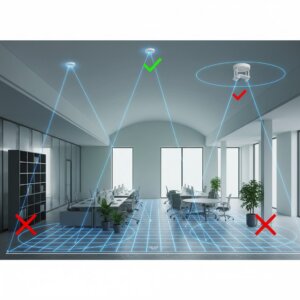
- Ensuring clear line of sight across the space
- Avoiding obstructions such as shelving or partitions
- Matching sensor coverage to room size and shape
- Considering ceiling height and mounting angles
Correct placement is essential for reliable detection.
Sensitivity and Time-Delay Settings
Sensors must be configured to suit how the space is used. Important settings include:
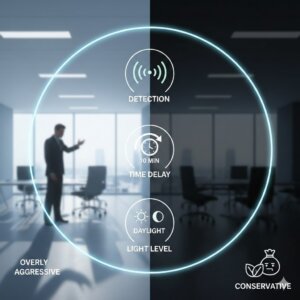
- Detection sensitivity
- Time delay before lights switch off
- Light level thresholds
Overly aggressive settings can annoy users, while conservative settings may reduce energy savings.
Integrating with Lighting Systems
Modern LED lighting systems are particularly well suited to sensor-based control. Older lighting may need upgrading to maximise savings and compatibility.
Professional Design and Installation
While some sensor systems are simple, professional design and installation often deliver better outcomes in commercial environments. Professionals can assess usage patterns and tailor systems accordingly.
Common Installation Mistakes to Avoid
Some of the most common mistakes include:
- Using motion sensors where presence sensors are required
- Ignoring how spaces are actually used
- Failing to test and fine-tune settings
- Treating sensors as standalone devices rather than part of a system
Avoiding these mistakes significantly improves performance and user satisfaction.
Why Presence & Motion Sensors Are a Smart Upgrade
Presence and motion sensors offer one of the quickest and most cost-effective ways to reduce energy costs in commercial spaces. They address a common source of waste without disrupting daily operations.
For property owners and managers looking for practical improvements, they represent a low-risk, high-impact upgrade.
Final Thoughts
Presence and motion sensors are a simple but powerful solution to one of the biggest sources of wasted energy in commercial buildings. By ensuring lighting is only used when spaces are occupied, they reduce electricity costs, improve efficiency and support sustainability goals.
For those considering Presence & Motion Sensors in UK properties, the key to success lies in correct sensor selection, thoughtful design and proper installation. When these elements are in place, sensors deliver reliable savings with minimal ongoing effort.
As energy costs continue to rise, automated lighting control is no longer just a smart idea. It is a practical step towards more efficient, cost-effective commercial spaces.