

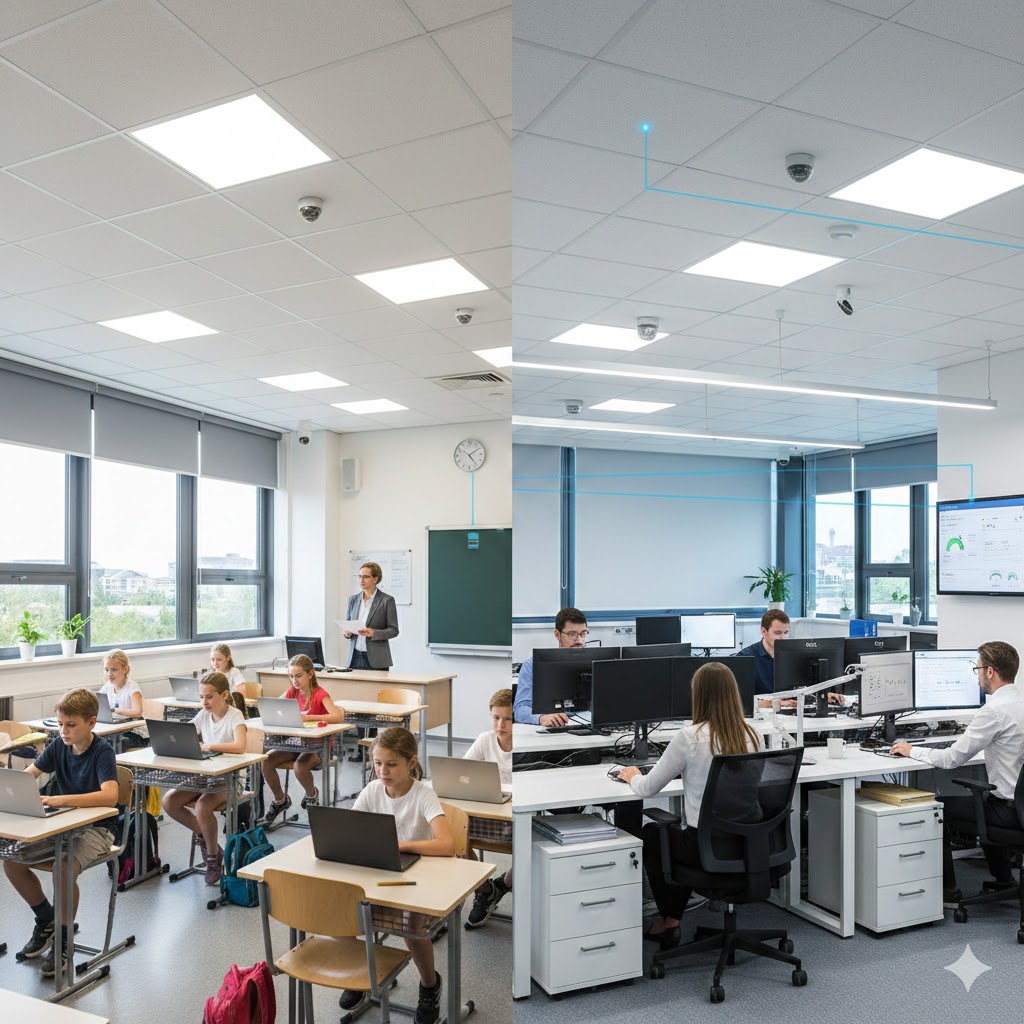
Case Study: Smart Building Automation in Schools and Offices
Schools and offices are two of the most demanding building environments to manage. Both require safe, comfortable, and productive spaces, yet both operate under constant pressure to reduce energy costs, meet sustainability targets, and function efficiently with limited resources. Traditional building systems struggle to meet these demands because they rely heavily on manual control, fixed schedules, and outdated infrastructure. Smart building automation is changing this reality. In particular, smart lighting for schools and offices has emerged as one of the most effective and accessible entry points into building automation. By using sensors, intelligent control systems, and automation logic, schools and offices are transforming how their buildings operate on a day-to-day basis. This case-study-style article explores how smart building automation is being applied in schools and offices, the problems it solves, the results it delivers, and the lessons learned from real-world deployments. Rather than focusing on theory, it focuses on practical outcomes and decision-making that can be applied to similar environments. Why Schools and Offices Are Ideal for Smart Automation Schools and offices share several operational characteristics that make them ideal candidates for smart building automation. Both environments typically have: Predictable operating hours Clearly defined rooms and zones High daytime energy consumption Periods of partial or zero occupancy Responsibility for occupant comfort, safety, and wellbeing Despite this, many buildings still rely on lighting and building systems that treat all spaces the same, regardless of whether they are occupied, naturally lit, or in use. Smart automation addresses this mismatch by aligning building behaviour with real-world usage. What Is Smart Building Automation? Smart building automation refers to the use of connected systems that automatically control building functions based on time, occupancy, environmental conditions, and predefined rules. In schools and offices, smart automation most commonly includes: Smart lighting systems Occupancy and presence detection Daylight-responsive control Centralised monitoring and management Automated schedules and scenes The objective is not to remove human control, but to reduce unnecessary manual intervention while improving consistency and efficiency. Overview: What Smart Automation Delivers in Practice Across schools and offices, smart automation consistently delivers a set of core benefits. Reduced Energy Consumption Lighting and building services operate only when needed, reducing waste during unoccupied periods. Improved Comfort and Usability Consistent lighting levels and smooth transitions create more comfortable environments for learning and working. Lower Operating Costs Energy savings, longer equipment lifespan, and reduced maintenance requirements lower long-term costs. Greater Visibility and Control Facilities teams gain insight into building performance and can make informed decisions. Flexibility for the Future Spaces can be reconfigured or repurposed without major rewiring or system replacement. These outcomes form the foundation of most successful smart automation projects. The 5 W’s of Smart Lighting for Schools and Offices Who Benefits from Smart Lighting? Smart lighting benefits: Students and teachers Office staff and managers Facilities and estates teams Building owners and operators Each group benefits in different but complementary ways. What Does Smart Lighting Control? Smart lighting systems control: When lights turn on and off How bright lights are How lighting responds to occupancy How spaces transition between modes This ensures lighting supports real behaviour rather than fixed assumptions. Where Is Smart Lighting Most Effective? Smart lighting delivers the most value in: Classrooms and lecture spaces Offices and meeting rooms Corridors and circulation areas Shared and breakout spaces These areas experience variable occupancy and benefit greatly from automation. Why Are Schools and Offices Investing in Smart Lighting? Key drivers include: Rising energy costs Sustainability and carbon reduction targets Improved wellbeing and comfort Compliance with regulations Pressure on operational budgets Lighting upgrades often provide one of the fastest returns. When Does Smart Lighting Work Best? The best results are achieved when smart lighting is planned during: Refurbishments New builds Lighting upgrades Space reconfigurations That said, many modern systems support retrofitting existing buildings. Case Study Focus 1: Smart Lighting in Schools The Challenge in Educational Buildings Schools face unique operational challenges. Common issues include: Lights left on in empty classrooms Inconsistent lighting quality High energy use during term time Limited facilities staff capacity Pressure to improve learning environments Traditional lighting systems rely on staff and students to manage lighting manually, which is unreliable and inefficient. The Smart Lighting Approach in Schools Smart lighting for schools focuses on automation that aligns with timetables and occupancy. Typical features include: Presence sensors in classrooms Daylight-responsive dimming Scheduled operation aligned with school hours Simple manual overrides for teachers Centralised monitoring for facilities teams Lighting becomes predictable, responsive, and easy to manage. Real-World Results in Schools Schools that have implemented smart lighting consistently report: Lighting energy savings of 30–60 percent Fewer complaints about lighting quality Reduced reliance on staff intervention Faster identification of faults Lower maintenance requirements Facilities teams gain control, while teaching staff gain consistency. Impact on Learning and Wellbeing Lighting plays a supporting role in learning. Smart lighting provides: Even, glare-free illumination Consistent light levels throughout the day Reduced visual fatigue While lighting alone does not improve academic outcomes, it removes environmental barriers to learning. Addressing Common Concerns in Schools Typical concerns include: Lights switching off during lessons Systems being too complex Budget limitations These issues are resolved through proper sensor configuration, intuitive controls, and phased implementation strategies. Case Study Focus 2: Smart Lighting in Offices The Challenge in Office Environments Office buildings often struggle with: Over-lighting of workspaces Lights operating outside working hours Inflexible layouts Poor control over shared spaces Rising energy and maintenance costs Hybrid working has made fixed schedules increasingly inefficient. The Smart Lighting Strategy in Offices Smart lighting for offices prioritises flexibility and responsiveness. Common features include: Zone-based occupancy detection Daylight harvesting near windows Scene-based lighting for meetings and presentations After-hours automation Integration with access control or booking systems Lighting adapts to how spaces are actually used, not how they were originally designed. Real-World Results in Offices Offices using smart lighting typically experience: Significant reductions in energy consumption Improved comfort and fewer lighting complaints Better support for flexible working patterns Lower maintenance intervention Improved sustainability reporting Lighting becomes part