
For a long time, shading in smart homes has been treated as a comfort feature.
Press a button, close the blinds. Create a scene, lower the shades. Add privacy to a bedroom or glare control to a cinema room. All useful, of course. But it misses a much bigger point.
In modern homes, shading is not just about convenience. It is part of how the building manages heat, glare, daylight and comfort.
That matters because overheating is now firmly part of the design conversation. Approved Document O was introduced in England to reduce overheating risk in new residential buildings by limiting unwanted solar gains and providing a way to remove excess heat from the indoor environment.
In plain terms, homes need to be designed so they do not become uncomfortable, unhealthy or over-reliant on cooling when the sun comes out.
For integrators, this is worth paying attention to.
Part O is often discussed by architects, energy consultants and building control teams. But lighting and shading specialists have a practical role to play too. Especially on projects with large areas of glazing, highly insulated fabric, open-plan living spaces or south and west-facing elevations.
These are often the homes where clients want the biggest windows, the cleanest lines and the most natural light. They are also the homes where solar gain can quickly become a problem if it is not managed properly.
This is where intelligent shading becomes more than a nice extra.
A blind that closes when someone presses a switch is useful. A blind that responds to the sun, room temperature, time of day and whether the room is occupied is doing something more valuable. It is helping the building look after itself.
That does not mean the system needs to be overcomplicated. In fact, the opposite is usually true. Good automation should be simple, predictable and easy for the homeowner to override. But the thinking behind it needs to be joined up.
A south-facing living room, for example, may benefit from different shading behaviour at different times of year. In winter, free solar gain might be welcome. It can help warm the space naturally and reduce demand on heating. In summer, the same sunlight may create glare, raise internal temperatures and make the room uncomfortable by mid-afternoon.
The product may be the same blind. The value comes from the control strategy.
This is where sensors and weather stations have an important role.
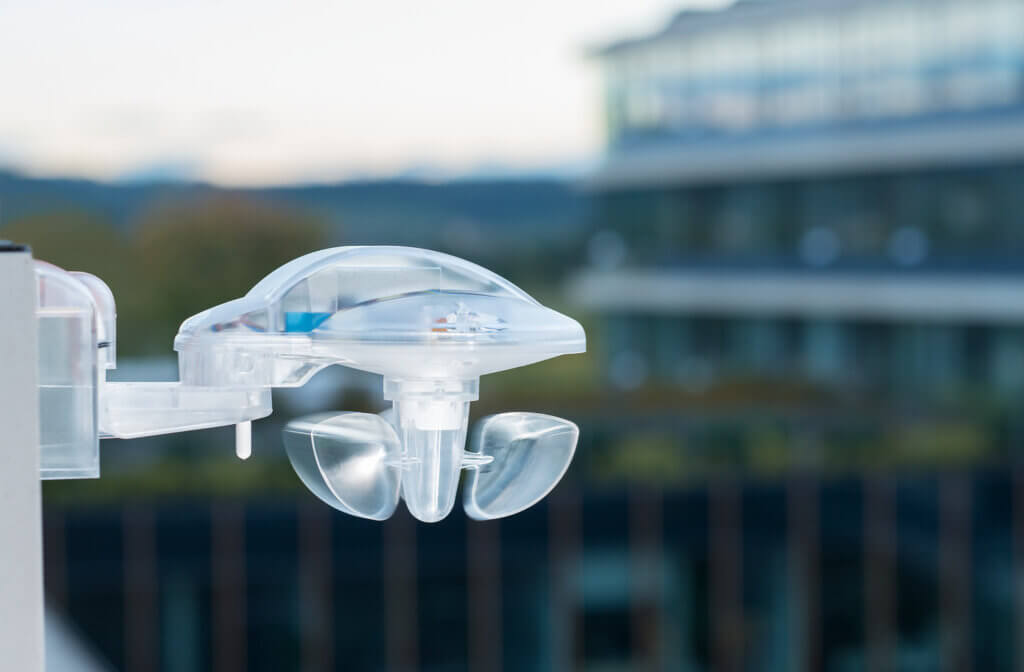
A weather station can provide information on brightness, sun position, wind, rain and temperature. Room sensors can add another layer by monitoring internal temperature, presence and light levels. Used properly, this data allows shading to respond to real conditions rather than fixed assumptions.
That is a big difference.
A timed blind schedule may look smart on day one, but it will not know whether it is cloudy, whether the room is already cool, or whether high winds make external shading unsafe. A connected control strategy can take these things into account.
External shading, for instance, can be highly effective at reducing solar gain before heat enters the building. But external blinds and awnings also need protection. If wind speeds rise beyond a safe level, they may need to retract automatically. If rain is detected, certain shading types may need to respond differently. If the sun moves away from a façade, blinds can reopen to restore daylight and views.
This is practical automation. Not technology for its own sake, but control that protects the building, supports comfort and makes the installation work harder.
The same thinking applies to lighting.
Daylight is one of the most important parts of a home’s atmosphere. Clients want bright, open spaces, but they do not want glare on screens, overheated rooms or lighting that fights against the natural light already available.
A good lighting and shading strategy should consider daylight first, then use artificial lighting where it adds value.
That might mean dimming internal lighting when daylight levels are high. It might mean using presence detection so lights are not left on unnecessarily. It might mean creating evening scenes that work with the blinds as they close, rather than treating lighting and shading as two separate events.
Again, none of this needs to feel complicated to the client. A homeowner does not need to understand every sensor input. They just need the room to feel comfortable, the lighting to feel right and the controls to be easy when they want to make a change.
For integrators, the challenge is to design systems that are intelligent without being irritating.
No one wants blinds moving up and down all day for no obvious reason. No one wants a system that overrides the client at the wrong moment. No one wants five apps and a handover folder full of logic the homeowner will never use.
The best results usually come from clear, practical rules. Use weather data where it adds real value. Use room sensors to understand what is happening inside the space. Give the homeowner simple manual control. Avoid over-automation that becomes distracting. Think about seasonal behaviour, not just daily schedules. Make sure lighting and shading support each other.
This is also where open systems become important. Lighting, shading, heating, ventilation and sensors should not be trapped in separate silos. When they can communicate, the building can respond more intelligently.
KNX has a strong role to play here because it is an open standard. It allows products from different manufacturers to work together, giving integrators more freedom in how they design and deliver a project. For those already working with other systems, this does not have to be an either-or conversation. KNX can sit within a wider building automation approach and provide a reliable backbone for functions such as lighting, shading, heating, sensors and weather-based control.
Theben’s view is that smart homes should be practical first. The technology should solve real problems for installers, integrators and end users. That means reliable products, clear commissioning, sensible training and systems that are easy to live with once the installer has left site.
Training is an important part of that. Lighting and shading integration is not just about product choice. It is about design confidence. Integrators need to understand how systems interact, how to avoid over-complication and how to deliver something the homeowner will actually use.
Through Theben Academy, Theben supports installers and integrators with training around KNX, building control and practical system design. That support helps professionals build confidence with the technology, but also with the logic behind it. Because the real skill is not just making the blinds move or the lights dim. It is knowing when they should, why they should, and how that decision supports the building as a whole.
Part O has helped bring overheating into sharper focus. But even beyond compliance, the direction of travel is clear. Homes are becoming better insulated, more airtight and more glazed. Clients want natural light, low energy use and year-round comfort. Those things do not always happen automatically.
They need control.
For the smart home sector, this is a useful moment to reframe the conversation around lighting and shading. It is not just about scenes, luxury or convenience.
It is about making homes work better in the real world.
When shading responds to solar gain, when lighting responds to daylight, and when sensors help the building make sensible decisions, the result is a home that feels easier to live in. More comfortable in summer. More efficient through the year. More joined up for the client.
That is where lighting and shading should be heading.